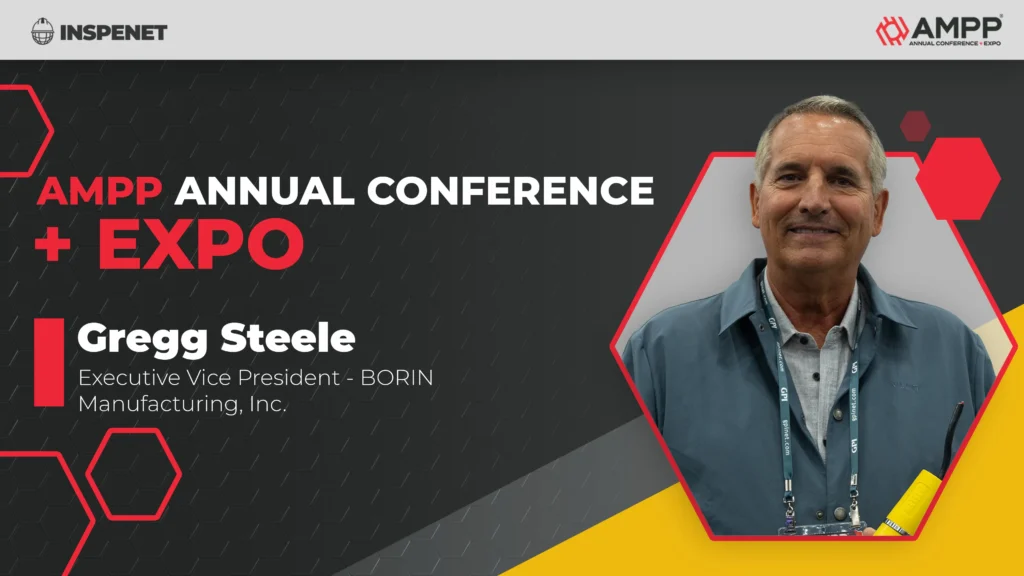
During the AMPP Annual Conference + Expo 2026, BORIN Manufacturing focused on the technological evolution of cathodic protection. In this context, Gregg Steele, the company's Executive Vice President, shared the vision and advances that are setting the industry's course.
BORIN Manufacturing positions itself as a manufacturer specialized in cathodic protection materials, with a track record of over four decades. The company has developed solutions focused on reference electrodes and monitoring systems, consolidating its presence in international markets and critical applications.
Likewise, its growth is supported by a clear focus on technological innovation and operational reliability. With a presence in dozens of countries and a consolidated portfolio, BORIN has evolved from developing key components to integrating complete measurement and control systems.
One of the company's pillars lies in the development of high-precision reference electrodes. These devices are fundamental in cathodic protection systems, as they allow for measuring electrochemical potential and ensuring infrastructure integrity.
In this regard, Gregg Steele highlighted the use of medical-grade ceramic membranes that allow for controlling material porosity. This technology facilitates the ion exchange necessary for measurements while blocking contaminants present in soil or marine environments.
Thus, the electrodes maintain long-term stability and precision even in aggressive conditions. This capability is crucial in sectors such as oil & gas or transportation networks, where data reliability is decisive for decision-making.
Furthermore, one of the most relevant advances presented by BORIN focuses on the integration of remote monitoring technologies with data acquisition systems. Traditionally, these systems operated independently, which limited analytical capacity.
However, the company has developed a solution that combines both functions into a single system. This integration allows for high-frequency readings, reaching records per second, representing a significant leap in cathodic protection management.
Likewise, this capability is especially useful in environments with AC and DC interference. Thanks to high data resolution, operators can identify variations in real time and act with greater speed and precision.
Consequently, the digitization of monitoring improves operational efficiency and reduces risks associated with undetected failures.
In line with this evolution, BORIN is incorporating advanced analysis tools based on artificial intelligence. These technologies leverage the large volume of data generated by monitoring systems to anticipate potential incidents.
According to Steele, access to continuous, high-frequency data allows for the development of models capable of predicting failures before they occur. This approach transforms traditional management into a predictive model, where prevention replaces reaction.
Likewise, this capability has a direct impact on the safety of critical infrastructure. Systems such as pipelines or energy networks require constant control, and anticipating problems helps avoid high-impact incidents.
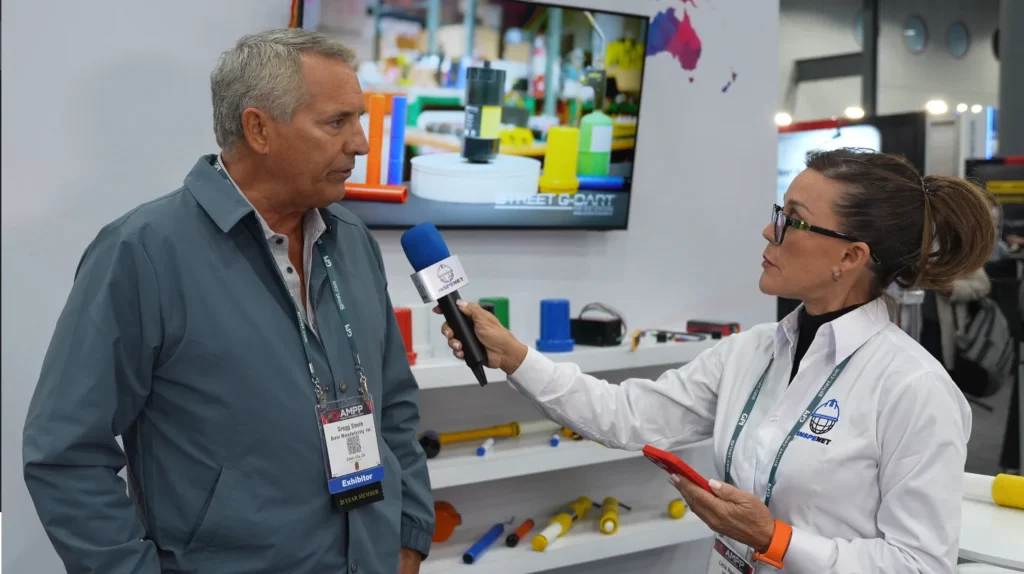
Another highlight of the interview is the innovation in IR-free measurement methods; BORIN has been a pioneer in integrating reference electrodes with corrosion coupons, allowing for more precise measurements in complex systems.
These coupons act as controlled defects that simulate real conditions on the pipe surface. By reducing the distance between the measurement point and the structure, the potential drop effect is minimized, improving data accuracy.
This way, engineers can more accurately evaluate the protection status of assets, which is essential in environments where interference can distort conventional measurements.
Technological advancement in the sector also faces structural challenges, one of the main ones being the shortage of engineers specialized in corrosion and cathodic protection.
As Steele points out, the retirement of experienced professionals has created a gap that has not yet been fully filled. In response, the industry is promoting the incorporation of specific academic programs in universities.
Likewise, companies like BORIN are encouraging the entry of new talent through internship programs and training initiatives. This effort seeks to ensure the continuity of technical knowledge in a key area for industrial safety.
Ultimately, BORIN's participation in AMPP 2026 reflects a clear commitment to digitization and innovation in cathodic protection. The combination of advanced sensors, remote monitoring, and data analysis is redefining how infrastructure is managed.
Looking ahead, the integration of artificial intelligence and high-frequency systems will allow for progress toward more efficient and secure models. In this context, companies like BORIN continue to develop solutions that meet the needs of a constantly evolving sector.
For more content about AMPP 2026, please visit our LinkedIn profile.
Source: Inspenet.