
Table of Contents
- What are industrial coatings?
- Technical function on the substrate
- Difference between protection and finish
- Functions of coatings in surface engineering
- Types of industrial coatings
- Application methods
- Surface preparation and adhesion
- Applicable standards for industrial coatings
- How to select coatings according to the environment
- Common failures in industrial coatings
- Applications and industry expert insights
- What the mechanical integrity experts say
- Technological trends
- Conclusions
- References
- Frequently Asked Questions (FAQs)
- What are industrial coatings?
- What standards inspect industrial coatings?
- How to choose industrial coatings according to the environment?
- What is the difference between coatings and paints?
- What type of coating is best for marine environments?
- Why is surface preparation important?
- What is the role of the coating in mechanical integrity?
Industrial coating systems protect assets against corrosion, wear, and chemical attack in severe operating environments. An incompatible selection for the substrate or the environment can accelerate failures and significantly increase maintenance costs.
Understanding the technical relationship between the base material and the protection system is key to preserving mechanical integrity. Based on this analysis, selection criteria, applicable standards, and application methods are defined to extend the service life of critical infrastructure.
What are industrial coatings?
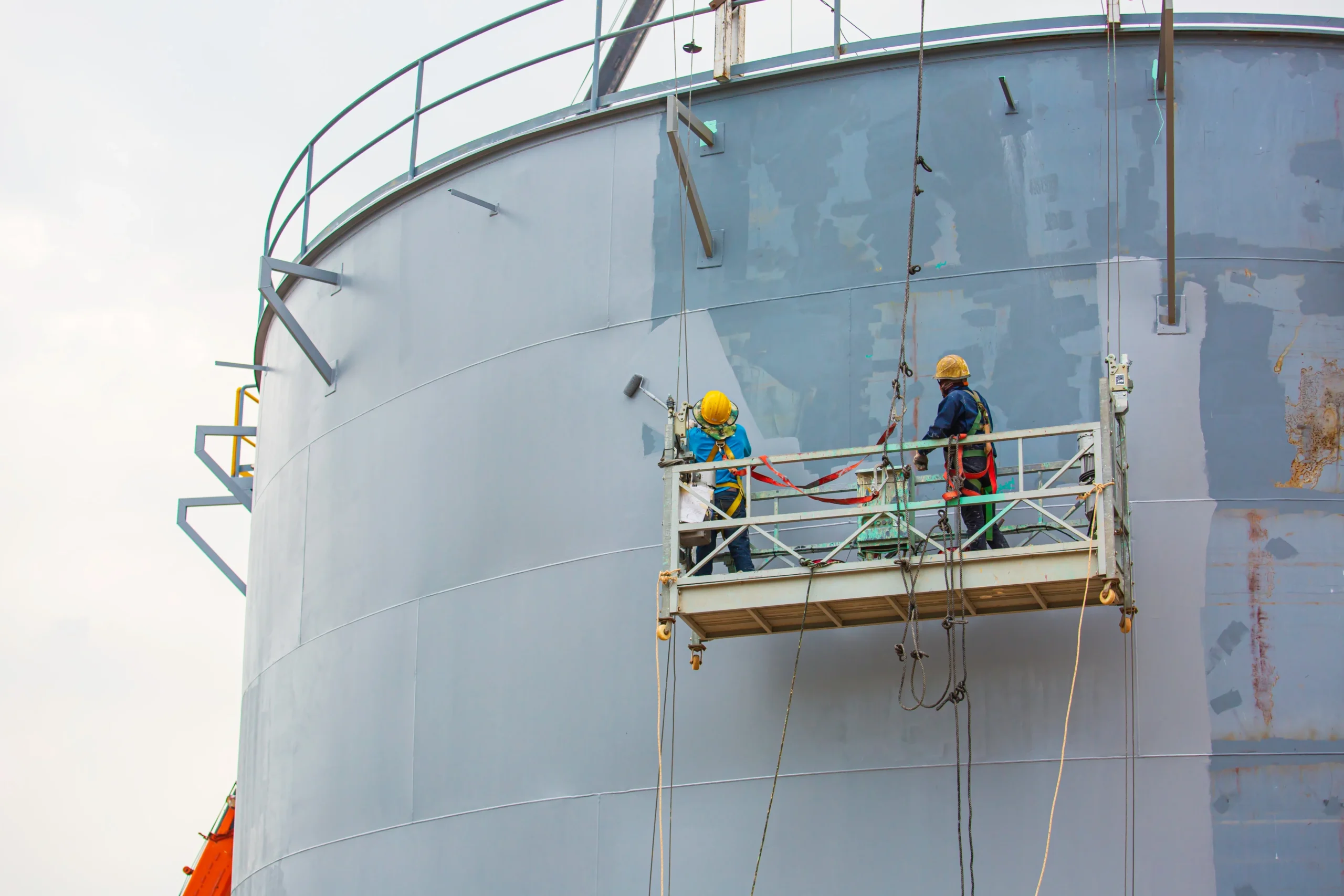
A coating or lining is a layer of material applied to a substrate’s surface to modify its behavior toward the environment. Beyond the visual finish, they function as a barrier, a functional layer, or surface reinforcement against degradation mechanisms that affect the asset’s integrity.
They are applied to metals, alloys, concrete, and other materials to improve performance in humid, marine, chemical, abrasive, or high-temperature environments. From a surface engineering perspective, their effectiveness depends on the relationship between the substrate, the environment, and the predominant damage mechanism.
Technical function on the substrate
The substrate is the base material. Its surface condition, composition, and compatibility with the selected scheme directly influence adhesion and the final performance of the system.
A lining alters surface behavior without completely changing the structural properties of the base material, providing chemical resistance, friction control, or electrical insulation.
Difference between protection and finish
Not all surface protection systems fulfill the same function. Some prioritize appearance, while others respond to demands for integrity, reliability, and maintenance. In critical applications, selection must be based on verifiable performance, not just aesthetics.
Functions of coatings in surface engineering
In the industry, industrial linings directly influence operational reliability, maintenance frequency, and asset lifespan. Their contribution is not limited to covering a surface but to modifying its response to physical, chemical, and mechanical agents.
- Anticorrosive protection: Its most widespread function is to isolate the substrate from contact with moisture, oxygen, salts, and chemical compounds. In carbon steel, for example, the system must act as a continuous and adherent barrier to halt electrochemical degradation.
- Wear resistance: They are also used to resist abrasion, erosion, friction, or particle impact. This is common in pumps, valves, pipelines, turbines, and solids transport equipment.
- Special functional properties: Some surface solutions provide electrical insulation, conductivity, thermal resistance, friction control, or chemical resistance. In many cases, the coating is part of the equipment’s functional performance.
Types of industrial coatings
The classification of industrial coatings depends on their composition, function, and protection mechanism. There is no universal solution: each system responds best to certain service conditions.
- Metallic coatings: These include galvanizing, nickel plating, and chrome plating, among others. They improve corrosion resistance and, in some cases, provide sacrificial protection, as is the case with zinc over steel.
- Paints and organic coatings: Among the most used systems in anticorrosive protection. This includes epoxy, polyurethane, alkyd, vinyl, and phenolic systems. Their versatility is high, but their performance depends on surface preparation and application control. Within this group, paints and coatings remain one of the most widespread solutions for structures, tanks, and pipelines.
- Ceramic coatings: Used when there is high temperature, severe abrasion, erosion, or chemically aggressive environments. They are common in components subjected to extreme conditions.
- Advanced coatings: Technologies such as PVD, CVD, and DLC are used in high-precision applications, surface hardness, or low friction. While their application is not always widespread in conventional assets, they show the evolution of surface engineering.
Application methods
The performance of industrial linings does not depend solely on the material. The application method influences thickness, uniformity, continuity, porosity, adhesion, and final resistance of the system—parameters that can be evaluated through non-destructive testing during inspection and quality control.
Main application methods
- Electrodeposition: An electrochemical process used in systems like galvanizing, nickel plating, or chrome plating. It allows for good thickness control and uniformity on parts with controlled geometries.
- Thermal spray: Used to deposit metallic, ceramic, or composite materials onto demanding surfaces. It is useful for protecting or recovering components subjected to abrasion, erosion, or temperature.
- Liquid paints and coatings: Liquid paints and coatings are applied by brush, roller, or spray. They are widely used in anticorrosive protection due to their versatility and ability to cover large surfaces.
- Vapor phase deposition: Processes like PVD and CVD allow for the formation of thin layers with highly controlled properties. They are reserved for high-technical-value parts and precision components.
Surface preparation and adhesion
Surface preparation is one of the factors that most influences the success of industrial coatings. Many premature failures are due to insufficient cleaning, the presence of contaminants, or an inadequate anchor profile.
- Cleaning and removal of contaminants: The surface must be free of oxides, grease, moisture, dust, and soluble salts. Even small amounts of residue can affect adhesion and promote corrosion under the protective film.
- Anchor profile and roughness: The surface texture must be compatible with the applied system. A profile that is too low reduces anchorage; one that is excessive can affect continuity and effective thickness.
- Pre-application errors: Failures can also occur when the system is applied over retained moisture, when residual corrosion remains, or when too much time passes between preparation and application. Recontamination and flash rusting reduce initial adhesion.
Applicable standards for industrial coatings
The execution of engineering projects requires compliance with international standards that allow for the verification of surface preparation, adhesion, and durability of industrial coatings.
Table 1 summarizes some of the most commonly used standards for the preparation, inspection, and control of coatings in industry, essential criteria for the mechanical integrity of industrial assets.
Table 1. Key standards for preparation, application, and inspection
| Standard | Organization | Stage or Main Use | Variable Evaluated |
| SSPC-SP 5 / NACE No. 1 | SSPC/NACE-AMPP | Surface Preparation | White Metal Blast Cleaning |
| SSPC-SP 10 / NACE No. 2 | SSPC/NACE-AMPP | Surface Preparation | Near-White Metal Blast Cleaning |
| SSPC-SP 6 / NACE No. 3 | SSPC/NACE-AMPP | Surface Preparation | Commercial Blast Cleaning |
| ISO 8501-1 | ISO | Visual surface evaluation | Rust grade and surface preparation state |
| ASTM D7091 | ASTM | Application inspection | Dry film thickness by non-destructive method |
| ASTM D4541 | ASTM | Adhesion testing | Adhesion strength by pull-off method |
| ASTM G62 | ASTM | Discontinuity inspection | Presence of pores or holidays in coatings |
Rather than simply memorizing acronyms, what matters most is identifying which technical parameter each standard addresses and how it contributes to the system’s performance in service. In harsh environments, these references also make it possible to verify whether the specified corrosion protection can hold up under actual operating conditions.
How to select coatings according to the environment
Coating selection depends directly on the aggressiveness of the operating environment. The following technical criteria are provided to help select the appropriate system based on the chemical, thermal, or mechanical exposure of the asset.
Table 2. Coating selection according to environment
| Service Condition | Main Risk | Selection Criteria | Recommended Type of Coating | Critical Application Aspect |
| Marine environment | Corrosion by humidity and chlorides | High anticorrosive barrier and weathering resistance | Multi-layer organics or metallic with sacrificial protection | Surface preparation, thickness, and edge sealing |
| Chemical exposure | Attack by aggressive substances | Chemical compatibility and system resistance | High-performance epoxies, phenolics, or special systems | Proper curing and continuity control |
| High abrasion | Accelerated wear by particles or friction | Surface hardness and mechanical resistance | Ceramics, thermal spray, or reinforced systems | Correct anchorage and functional thickness |
| High temperature | Thermal degradation and loss of properties | Thermal stability and service resistance | Ceramics or special coatings for heat | Selection compatible with thermal cycles |
| UV radiation and weathering | Finish degradation and loss of protection | UV resistance and color or film stability | Polyurethanes, polysiloxanes, or other resistant finishes | Uniform final application and curing control |
| Immersion or splash | Moisture penetration and localized corrosion | Low permeability and high adhesion | Epoxy systems or specific anticorrosive schemes | Control of defects, porosity, and discontinuities |
More than choosing an isolated product, the selection must be understood as a system decision: substrate, environment, application method, service life, and quality control. This criterion responds to the surface engineering approach, where system performance depends on the interaction between substrate, environment, and damage mechanism.
Common failures in industrial coatings
Analyzing the causes of failures in industrial coatings is the first step toward reducing maintenance costs. Table 3 summarizes the visible manifestations, their technical origins, and the necessary preventive actions.
Table 3. Common failures in industrial coatings
| Failure | Manifestation | Probable Cause | Consequence | Preventive Measure |
| Delamination | Partial or total detachment of the system | Poor preparation, contamination, or incompatibility between layers | Loss of adhesion and substrate exposure | Verify cleanliness, anchor profile, and scheme compatibility |
| Corrosion under coating | Hidden deterioration under the film | Pores, discontinuities, mechanical damage, or retained contaminants | Loss of thickness and accelerated degradation of the asset | Control continuity, thickness, and surface preparation |
| Blistering | Localized elevations in the film | Moisture, soluble salts, trapped solvents, or osmotic pressure | Rupture of the barrier and metal exposure | Ensure cleanliness, drying, and correct application conditions |
| Deficient curing | Soft, brittle, or unstable film | Incorrect mixing, inadequate temperature, or insufficient times | Lower mechanical and chemical resistance | Control proportions, environment, and curing times |
| Cracking | Fissures in the film | Deficient curing, internal stresses, or premature aging | Entry of corrosive agents and loss of protection | Select appropriate system and respect thicknesses and curing |
Rather than just correcting the visible defect, the analysis must focus on the mechanism that originated the failure. In that sense, prevention depends on treating industrial coatings as a complete system: proper selection, surface preparation, controlled application, and inspection according to technical criteria.
Applications and industry expert insights
The applications of industrial coatings span sectors where corrosion and materials are understood, as well as how wear and environmental exposure affect asset reliability. The selection of the system in each case must respond to the environment, the type of asset, and the dominant damage mechanism.
In all these sectors, anticorrosive protection is one of the most determining criteria for extending the service life of assets.
- Oil and gas: Used in pipelines, tanks, vessels, valves, structures, and equipment subjected to moisture, hydrocarbons, chemical agents, and marine environments.
- Energy: Protect metallic structures, towers, auxiliary equipment, and components exposed to weathering, thermal cycles, and continuous operation.
- Construction and infrastructure: Key in structural steel, bridges, support systems, and surfaces exposed to urban, industrial, or coastal environments.
- Manufacturing and automotive: Fulfill protective and functional roles, such as friction reduction, wear resistance, and improvement of surface finish.
What the mechanical integrity experts say
The interviews conducted by Inspenet during AMPP 2026 reinforce a central idea of this article: the performance of industrial coatings in mechanical integrity does not depend solely on the product, but on the complete protection system and its suitability for real service. In this context, industry voices provide valuable criteria on selection, durability, anticorrosive protection, and applied innovation.
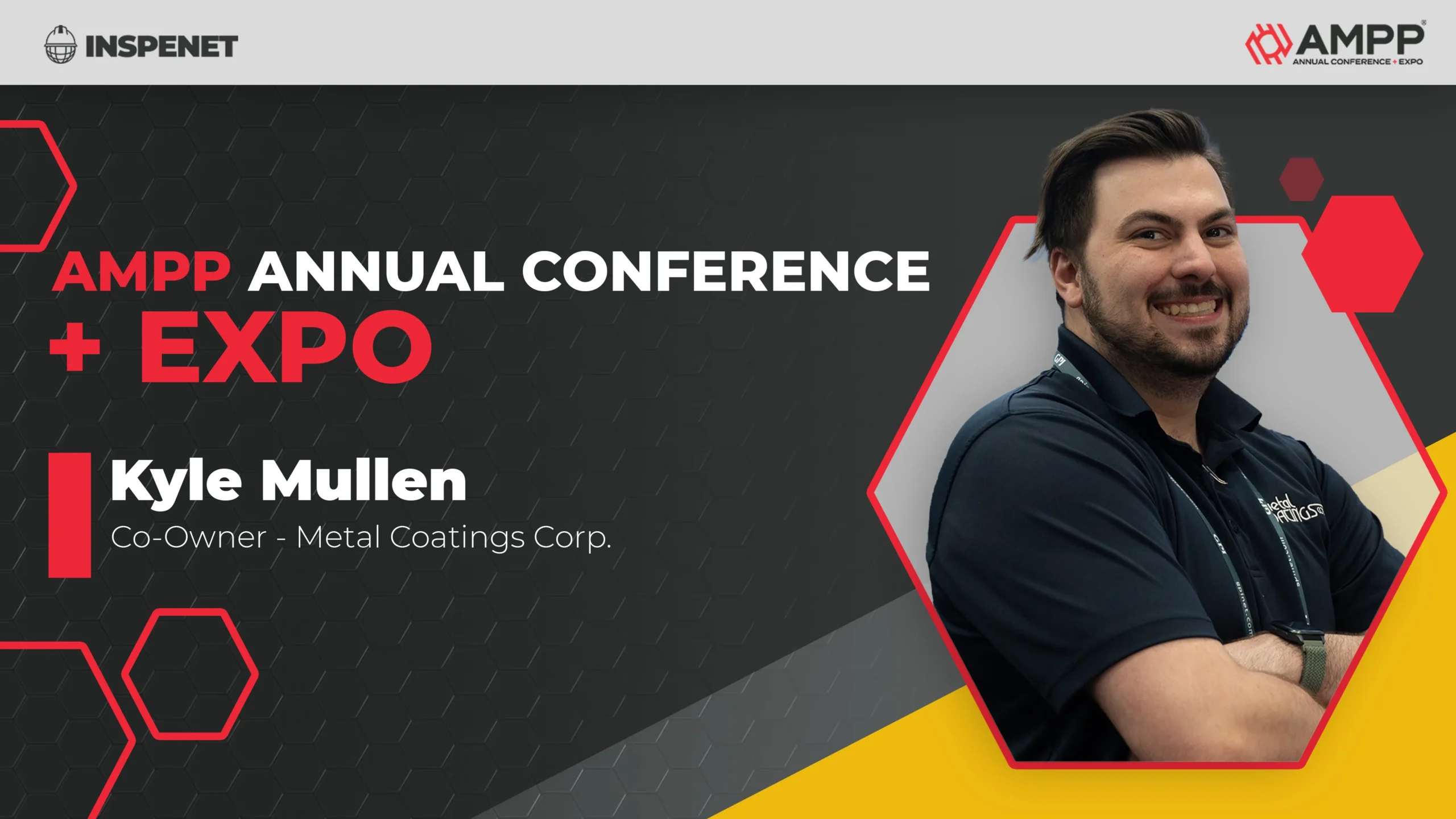
During this coverage, Kyle Mullen, co-owner of Metal Coatings Corp., emphasized that the choice of coating must be based on the part’s end use, operating conditions, and defined technical requirements. He also noted that coated components may be subject to failures related to corrosion, hydrogen embrittlement, and base material variables.
The interview also shows a relevant trend: the advancement of PFAS-compliant solutions to respond to new regulatory requirements in different markets. This confirms that the evolution of industrial coatings no longer depends only on technical performance, but also on environmental and regulatory compliance.
This vision is also reflected in the corporate ecosystem of the sector. In the Inspenet corporate section, companies like RAM-100, with coating solutions for mechanical and anticorrosive protection, and Dairyland Electrical Industries, focused on cathodic protection and anticorrosive protection for pipelines and tanks, show how asset durability depends on an integrated protection strategy rather than just the applied product.
Technological trends
The evolution of industrial coatings seeks to extend asset life with more efficient, sustainable systems adapted to demanding environments. In this context, developments such as industrial coatings from military innovation show that surface innovation no longer focuses only on protecting, but also on meeting regulations, improving efficiency, and expanding the system’s functionality. In summary, these trends are redefining the expected performance of industrial coatings in increasingly demanding environments.
- Ecological coatings: Formulations with lower volatile organic compound (VOC) content, lower environmental impact, and better alignment with new market regulatory requirements are advancing. This trend is already reflected in industry solutions, such as the water-based protective coatings developed by TOTAL COAT, aimed at meeting performance requirements and lower environmental impact.
- Applied nanotechnology: Nanotechnology allows for improved chemical resistance, hardness, hydrophobicity, and wear behavior.
- Smart coatings: These systems incorporate additional functions, such as response to environmental stimuli or support for condition monitoring strategies.
Conclusions
The selection of industrial coatings should not be reduced to a list of materials or a decision based only on initial cost. Their performance depends on compatibility with the substrate, environmental severity, surface preparation, application method, and the control of variables affecting adhesion and durability.
In critical assets, mechanical integrity management requires a technical selection that anticipates damage mechanisms such as corrosion, abrasion, blistering, or delamination. Under this approach, industrial coatings are established as a surface engineering strategy designed to extend service life and guarantee operational reliability.
Before specifying a protection system, it is advisable to evaluate whether the chosen coating responds to the substrate, the environment, the applicable standard, and the failure mechanism it seeks to prevent. At Inspenet, this analysis connects selection, inspection, and performance criteria with the real challenges of the energy and industrial sectors.
References
- ASM International. ASM handbook (Vol. 5, Surface engineering). ASM International.
- ASTM International. ASTM D7091: Standard practice for nondestructive measurement of dry film thickness of nonmagnetic coatings applied to ferrous metals and nonmagnetic, nonconductive coatings applied to non-ferrous metals. ASTM International.
- Fontana, M. G. Corrosion engineering (3rd ed.). McGraw-Hill Book Company.
- International Organization for Standardization. ISO 8501-1. Preparation of steel substrates before application of paints and related products—Visual assessment of surface cleanliness. ISO.
- Munger, C. G., & Vincent, L. D. Corrosion prevention by protective coatings (3rd ed.). NACE International.
- Revie, R. W. (Ed.). Uhlig’s corrosion handbook (3rd ed.). Wiley.
- Inspenet TV. “Metal Coatings bets on PFAS-free industrial coatings”
Frequently Asked Questions (FAQs)
What are industrial coatings?
Industrial coatings are systems applied over a substrate to protect it or modify its surface behavior against corrosion, wear, chemical agents, temperature, or friction.
What standards inspect industrial coatings?
In industrial coatings, standards related to surface preparation, dry thickness measurement, adhesion, and discontinuity detection are used. Among the most widely used are references from AMPP, ASTM, and ISO, depending on the type of asset and service requirements.
How to choose industrial coatings according to the environment?
Selection must consider the substrate, operating environment, expected service life, application method, and applicable standards.
What is the difference between coatings and paints?
Paint is part of organic coating, but not every coating is paint. There are also metallic, ceramic, and advanced systems.
What type of coating is best for marine environments?
It depends on the asset and the level of exposure, but in general, systems with high anticorrosive protection, good adhesion, and resistance to moisture, chlorides, and weathering are required.
Why is surface preparation important?
Because it dictates the adhesion and performance of the system. If the surface retains oxides, salts, or moisture, the coating can fail prematurely.
What is the role of the coating in mechanical integrity?
It mitigates damage mechanisms such as corrosion and erosion. By preventing thickness loss in the substrate, it ensures the asset operates within its design limits and extends its service life.