Table of Contents
- Transmart develops cores for high-frequency power
- Nanocrystalline ribbons with thicknesses of 12 to 14 micrometers
- Nanocrystalline cores register losses of 0.4 W/kg
- AI data centers increase electrical demands
- Applications beyond data centers
- Industrial capacity and international presence
- Solid-state transformers as the next technological area
Transmart it is strengthening its soft magnetic core technology to meet the needs of high-frequency power electronics and energy infrastructure associated with artificial intelligence data centers, the growing electricity demand linked to AI is increasing the demands on the systems responsible for transforming, filtering, and distributing energy. In this scenario, the materials used within transformers, inductors, and filters are of particular importance due to their influence on energy losses, operating temperature, and equipment dimensions.
Transmart Industrial Limited works with silicon steel, amorphous materials, and nanocrystalline alloys to manufacture components for these applications. The company has over 25 years of experience in soft magnetic materials and transformer core manufacturing. Its technological offering focuses particularly on applications where equipment must combine energy efficiency, high switching frequencies, and high power density.
Transmart develops cores for high-frequency power
Power electronics is evolving towards increasingly higher switching frequencies, this trend allows for the development of more compact equipment, although it also places new demands on the magnetic materials used within them. In a transformer, for example, the behavior of the core influences the energy losses generated during operation. A similar situation occurs with inductors and filters used within electronic power conversion systems.
For this reason, Transmart manufactures different families of soft magnetic cores using wound metal strips. Its product range combines silicon steel with amorphous and nanocrystalline materials to meet various frequency ranges and operating conditions. The company operates two specialized production facilities in China. One plant is primarily dedicated to silicon steel cores, components for current sensors, and cores used in instrument transformers.
The second facility focuses on the manufacture of nanocrystalline cores, amorphous cores, and common-mode choke coils. This structure allows for addressing different stages of the production chain, from tape processing to the manufacture of wound components that are subsequently integrated into electrical equipment.
Nanocrystalline ribbons with thicknesses of 12 to 14 micrometers
One of the technical elements highlighted by the company is its ability to produce nanocrystalline tape with a thickness between 12 and 14 micrometers. The thickness of this material has important implications for high-frequency applications. A thinner tape helps reduce losses associated with eddy currents as the operating frequency increases.
This characteristic can facilitate the development of transformers and inductors that operate with less heat generation. It can also contribute to reducing the size and weight of certain components for a given power rating. To control these properties, the company uses its own production lines that include precision slitting, automatic winding, vacuum annealing, and multi-wire cutting systems.
Controlling these stages allows for adjusting parameters such as tape dimensions, the magnetic properties of the material, and the geometry of the finished core. This level of control is particularly relevant in power electronics systems, where small variations in physical or magnetic characteristics can affect the component’s behavior when operating at high frequencies.
Nanocrystalline cores register losses of 0.4 W/kg
Technical data published by the company indicates that its cut nanocrystalline cores achieve core losses as low as 0.4 W/kg under test conditions of 20 kHz and 50 mT. Furthermore, the manufacturer produces a low-permeability nanocrystalline tape with a permeability index of 3000 specifically designed for high-frequency transformer applications.
Controlled permeability aims to maintain stable material behavior across a wide frequency range, this property is particularly useful in electronic designs where operating conditions can vary during equipment operation. Along with nanocrystalline technology, the company maintains a range of amorphous materials for applications requiring lower switching frequencies and high energy efficiency.
This family comprises various geometries such as toroidal cores, C and E configurations, block cores, and amorphous components for stators. The availability of multiple configurations allows the magnetic material to be adapted to different electrical designs without being limited to a single transformer or inductor architecture.
AI data centers increase electrical demands
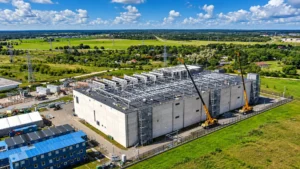
The expansion of the artificial intelligence data centers it is placing electricity consumption at the heart of its infrastructure decisions. These complexes need systems capable of supplying large amounts of energy while keeping losses under control during the various stages of transformation and distribution.
Within this chain are transformers, inductors, filters, and other power electronics components, the behavior of their magnetic materials can influence both the efficiency and the final temperature and dimensions of the system. Architectures operating at high switching frequencies also present different requirements than those of conventional electrical transformers.
In this context, ultrathin nanocrystalline tapes represent one of the technologies that can be used to control magnetic losses in equipment designed to operate at high frequencies. Transmart’s interest in data centers is directly related to this trend. The company aims to supply magnetic components to manufacturers and engineering teams developing energy infrastructure and power conversion systems.
Applications beyond data centers
Soft magnetic material technologies have applications that extend far beyond IT infrastructure, the cores can be incorporated into renewable energy systems, industrial electronics, and equipment for controlling electrical currents. Among the applications highlighted by the company are solar and wind turbine inverters, electric vehicle charging infrastructure, EMI/EMC filters, and precision current transformers.
Common-mode chokes are part of this ecosystem, these components are used to manage certain electromagnetic interference present in electronic circuits and electrical systems. The variety of applications explains why the manufacturer maintains technologies based on different materials. Silicon steel, amorphous alloys, and nanocrystalline materials have different properties that can be leveraged depending on the frequency, power, and equipment configuration.
Industrial capacity and international presence
The production of these components relies on an industrial structure that combines manufacturing and commercial activity. Transmart reports that its facilities operate under internationally recognized systems such as ISO 9001, ISO 14001, ISO 45001, and IATF 16949. These certifications cover aspects related to quality management, environmental management, occupational health and safety, and quality requirements linked to the automotive industry.
The company currently supplies its products to customers in more than 50 countries, Europe accounts for a significant portion of this business, although the manufacturer is expanding its collaboration with customers, partners, and engineering teams in North America. This move coincides with investments in data centers and network infrastructure, two areas where power availability and the efficiency of electrical systems have become critical considerations for new projects.
The company seeks to participate in this expansion through customized soft magnetic cores and common-mode choke coils intended for energy infrastructure and data processing projects.
Solid-state transformers as the next technological area
Another area Transmart is monitoring is the development of solid-state transformers, known as SSTs, unlike a conventional transformer, this architecture integrates power electronics with energy conversion and transformation functions.
Its development could open new possibilities for advanced electrical grids and systems where more flexible energy flow management is required. AI data centers appear among the potential application areas due to their high power requirements and the evolution of their electrical architectures.
However, solid-state transformers are still in an early stage of research and development, and their commercial deployment remains limited. Therefore, their role within data center power infrastructure will continue to depend on technological advancements and the commercial viability of these architectures.
For manufacturers of magnetic materials, this development opens a new field of research. SST systems use power electronics that can operate at frequencies higher than those used by traditional transformers. In this scenario, materials capable of reducing high-frequency magnetic losses could become increasingly important as these technologies advance toward commercial applications.
Transmart’s experience with thin nanocrystalline tapes, amorphous cores and high-frequency magnetic components places its technological strategy precisely around this evolution of electrical conversion systems.
Source: PR Newswire
Photo: Shutterstock