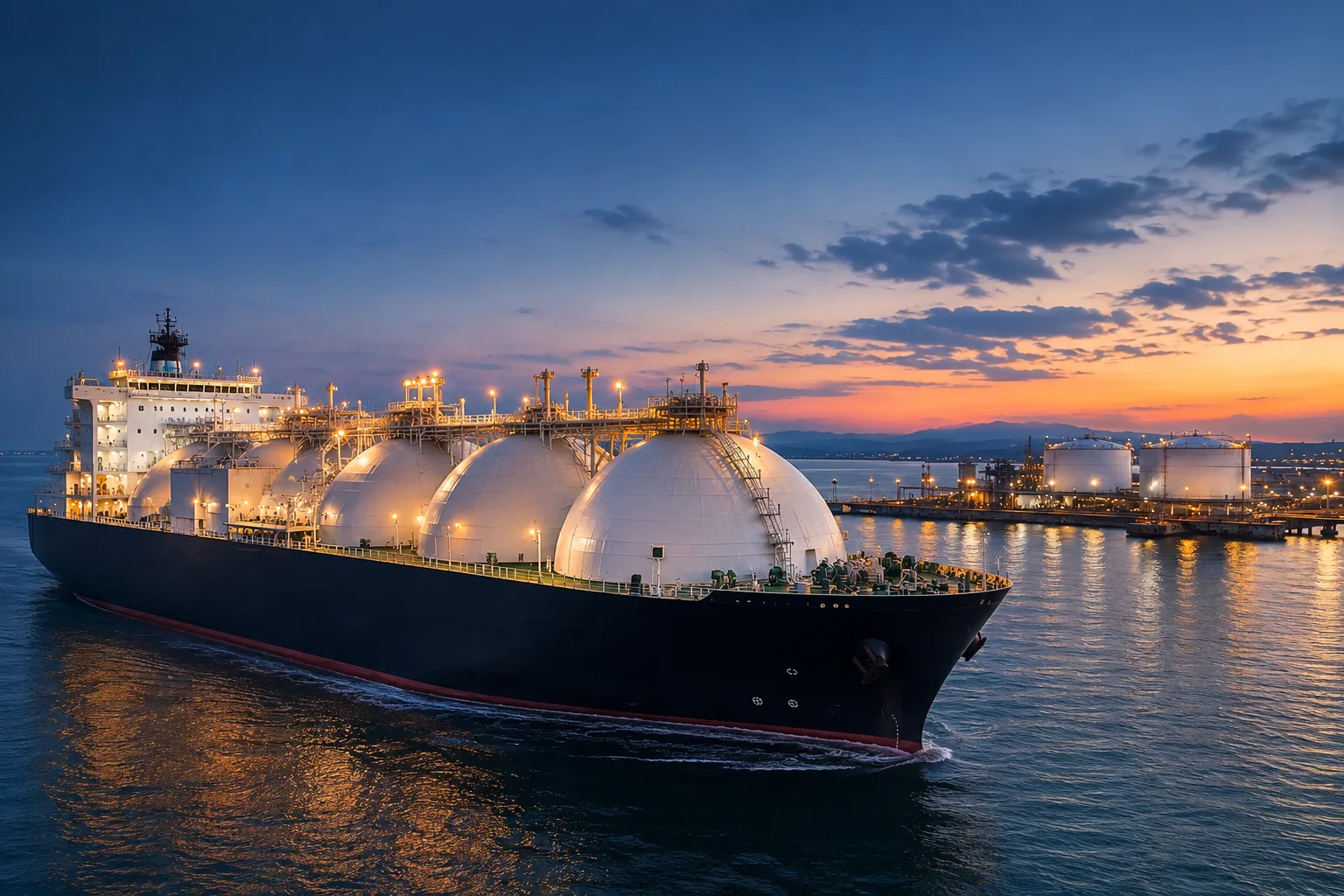
Pakistan is studying allowing power plants and private companies to directly import spot-market liquefied natural gas (LNG), in an attempt to expand supply options while the disruption of cargoes from Qatar continues.
The Energy Ministry’s proposal contemplates relaxing current regulations, which have limited private operators’ access to the spot market, historically dominated by state importer Pakistan LNG Ltd.
The measure comes after the disruption of contracted supplies from Qatar forced Pakistan to turn more frequently to the international market to cover its needs.
Lower cargo availability and rising LNG prices have increased power generation costs and pressure on the country’s energy bill.
Pakistan seeks to expand access to spot LNG
The regulatory modification would allow more participants to bid directly in LNG cargo auctions and use capacity that remains available at the country’s two import terminals.
The strategy seeks to reduce dependence on centralized procurement and expand the number of companies capable of responding to changes in international supply.
However, a larger number of buyers does not necessarily imply an immediate reduction in prices. Spot imports remain exposed to global cargo availability, maritime transport costs, and conditions on major trade routes.
In a situation of restricted supply, new participants must compete for the same available volumes.
The crisis exposes dependence on Qatar
Before the supply disruption, Pakistan relied heavily on long-term contracts with Qatar to meet its LNG needs. Problems stemming from the regional crisis and restrictions on transit through the Strait of Hormuz altered that structure and forced the country to seek alternative volumes in the spot market.
Qatar declared force majeure on certain deliveries after attacks affected its LNG export infrastructure at Ras Laffan.
Subsequently, state company QatarEnergy extended force majeure on some supplies destined for Asian and European buyers, maintaining pressure on markets that depend on those cargoes.
For Pakistan, the direct consequence has been greater exposure to spot purchases and higher international prices.
Gas used for power generation thus ceases to be determined solely by supply contracts and becomes dependent also on the immediate availability of vessels, maritime routes, and import capacity.
Terminals become strategic assets
Pakistan has two LNG import terminals, so utilization of their available capacity has become one of the central elements of the proposal.
Allowing private companies to participate directly could increase utilization of those facilities when the state importer does not use all available capacity.
The chain, however, requires several elements to function simultaneously. LNG must be contracted, loaded at origin, transported by sea, received at a terminal, regasified, and introduced into the gas network before reaching power plants.
Recent experience further shows that having terminals does not eliminate geopolitical exposure. As long as LNG from Qatar depends on a maritime route that crosses a zone subject to severe restrictions, Pakistan will remain exposed to external disruptions even if it can acquire cargoes directly.
The power market remains exposed to gas prices
The proposal’s relevance transcends the LNG market because Pakistani power plants require continuous supply to meet electricity demand.
Rising spot cargo costs are transmitted directly to generation costs when gas replaces volumes contracted under different conditions.
Opening direct imports can create more options for generating companies and allow certain operators to manage their own fuel needs.
SOURCE and PHOTO: https://oilprice.com/