Initial cost does not tell the whole story
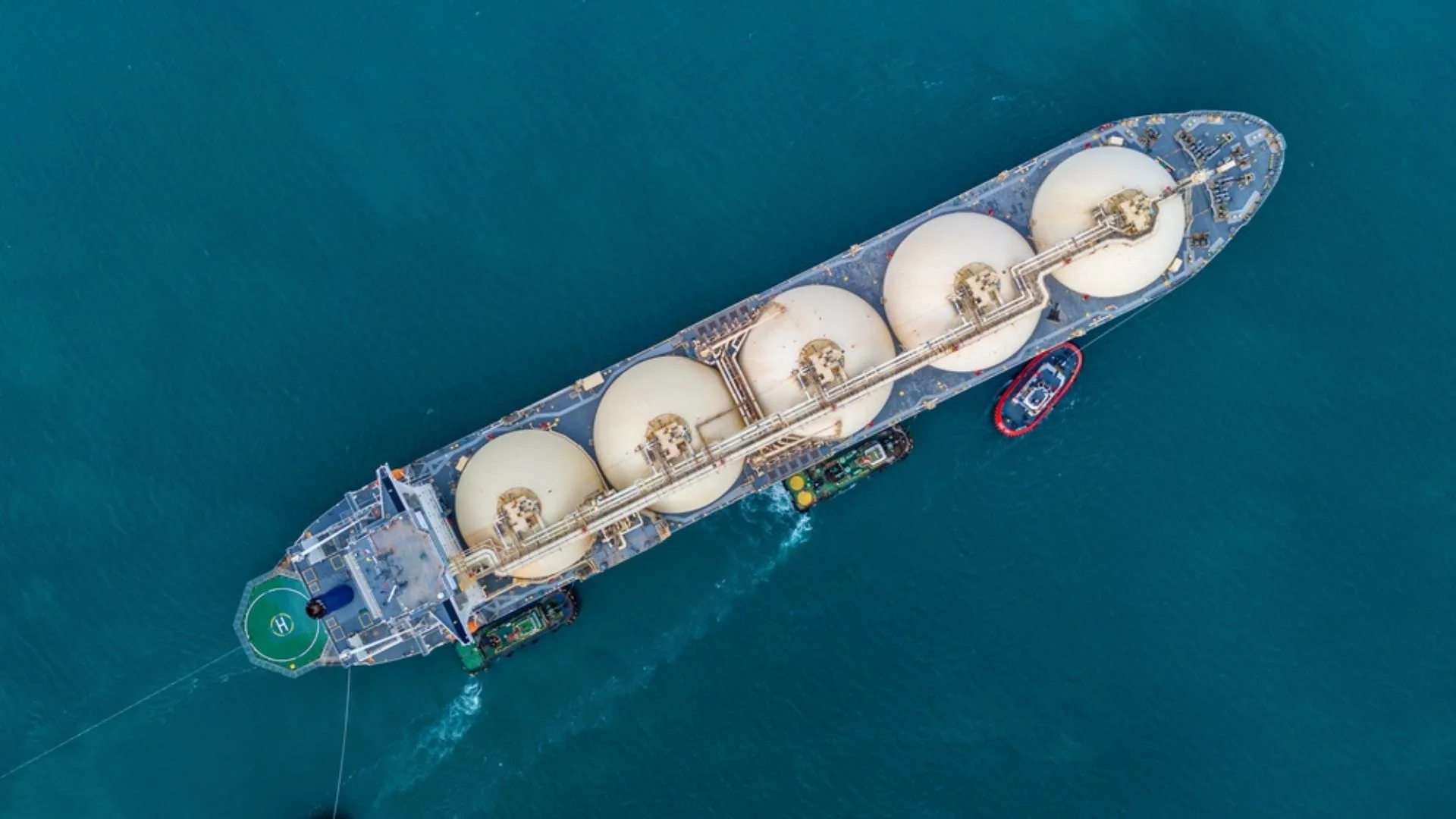
A joint study by the American Bureau of Shipping (ABS), Blossom Energy, and an international shipping company proposes a nuclear propulsion alternative for large-capacity LNG carriers.
The analysis considers a 174,000 m³ LNG carrier equipped with a 20 to 25 MWe high-temperature gas-cooled reactor (HTGR) developed by Blossom Energy.
The most striking economic result is also the main obstacle: the initial investment for the nuclear vessel would be approximately 2.5 times higher than that of a conventional LNG-powered carrier.
However, the model incorporates fuel costs and emission-related charges throughout the vessel’s operational life, shifting the comparison from construction price to total cost of ownership.
The ABS evaluation considers an entry into service in 2040, a 25-year lifespan for the vessel, and a 5% discount rate. Under the greenhouse gas charge scenario contemplated in the IMO Net-Zero framework, the TCO was up to 15% lower than the conventional alternative when incorporating the use of compliance credits through fleet pooling. Without this mechanism, the calculated reduction was 4%.
A reactor designed to outlast the ship
The ABS study does not necessarily treat the reactor as a component that dies with the ship. The model considers a 50-year life for the modular system compared to 25 years for the vessel, allowing for the evaluation of its potential removal and reinstallation on a second ship.
The reference HTGR uses graphite as a moderator and helium as a coolant. The study contemplates a system measuring approximately 17 × 15 × 22 meters and weighing about 6,000 tons, in addition to electrical systems, batteries, and emergency propulsion means.
Therefore, it is not simply a matter of replacing a conventional engine with a reactor: it changes the mass distribution, auxiliary systems, electrical architecture, and safety requirements of the vessel.
This distinction allows for a different business model. If the reactor retains technical value after the retirement of the first LNG carrier and can be transferred to another vessel, part of the investment is no longer exclusively associated with the life cycle of a single ship.
The energy asset then acquires a potential second life, although this reuse still belongs to the scope of the economic model studied.
ABS: Regulation remains part of the design
The calculated economics depend considerably on the regulatory framework. The study itself notes that, without greenhouse gas charges, the costs of the reactor in its current First-of-a-Kind (FOAK) configuration would make it difficult to compete in TCO with a conventional vessel.
Cost reduction through standardization, serial production, and vessel optimization to integrate the reactor appears as a relevant condition for improving that equation.
The regulatory dimension is also not finalized. The IMO maintains specific requirements for nuclear ships in Chapter VIII of SOLAS and is working on the revision of the Code of Safety for Nuclear Merchant Ships, originally adopted in 1981. The organization’s work plan contemplates finalizing the code revision and corresponding SOLAS amendments in 2030.
Therefore, it would be incorrect to interpret nuclear propulsion as a solution that simply eliminates regulatory risk. The shift consists of transferring part of the economic exposure from fuel and emissions toward nuclear safety requirements, licensing, port access, insurance, liability, and fuel management.
SOURCE and PHOTO: https://www.offshore-energy.biz/