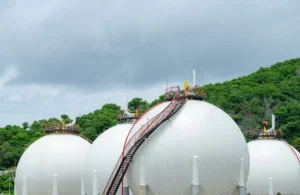
In global energy markets, storage tanks are often treated as background infrastructure-necessary, expensive, and largely static. In pipeline circles, they are sometimes dismissed as “wide spots on the pipe.” But that view misses their real role. When governments change policy, conflict disrupts trade routes, weather shuts in production, or price signals shift unexpectedly, storage tanks are among the first places where market stress becomes visible.
That short-term sensitivity matters because storage sits at the intersection of supply, transportation, refining, and end-use demand. A policy decision or a shipping disruption on the other side of the world can quickly change how tanks are used in another region. In some cases, tanks act as buffers, absorbing temporary imbalances until flows return to normal. In others, they become bottlenecks, restricting movement when capacity is unavailable, inflexible, or in the wrong location.
For tank owners/operators and customers, these effects are not theoretical. They show up in utilization rates, inventory turnover, product handling requirements, inspection schedules, and decisions about when to store and when to move product. In the short term, storage tanks do more than hold inventory – they reveal whether the system has room to adapt.
Storage Tanks as Buffers
The main value of storage in a volatile market is that it buys time. When supply continues but transportation slows, tanks hold the excess. When inbound cargoes are delayed, stored inventory can help keep refineries, terminals, and customers supplied. In that sense, tanks serve as the system’s first line of defense against short-term imbalance.
These disruptions usually play out over weeks or months rather than years. During that period, storage can prevent a logistics problem from becoming a broader supply crisis. If a port is congested, a pipeline is constrained, or refinery throughput is interrupted, tanks provide temporary flexibility while operators adjust.
But the buffering role depends on more than nameplate capacity. What matters is whether the right capacity is available, connected, and suitable for the product in question. A facility may seem to have storage on paper, but because some tanks are dedicated to specific products, unavailable for service, or not connected to the needed transfer systems, they don’t. In short-term disruptions, usable capacity matters more than theoretical capacity.
When buffers become bottlenecks
The same tanks that protect the system can also expose its limits. Storage becomes a bottleneck when product cannot move in or out fast enough, when operators cannot switch tanks between services quickly, or when regulatory requirements reduce flexibility.
This is where short-term market stress becomes operational. Delayed outbound shipments can cause tanks to fill rapidly, leaving little room for continued production or receipts. Late inbound deliveries can force rapid drawdowns, reducing operational margins. Product segregation rules can tie up capacity just when flexibility is most needed. A tank that could theoretically hold several products over the course of a quarter may, in practice, be committed to one service because of cleaning requirements, compatibility concerns, or compliance obligations.
Once that happens, storage stops cushioning disruption and starts transmitting it. Bottlenecks at the tank level can slow refinery operations, complicate terminal schedules, increase contamination risk, and raise costs throughout the supply chain.
World Events Test the System’s Flexibility
World events often affect storage before the wider market fully rebalances. Armed conflict, shipping disruptions, labor actions, and extreme weather all change the timing and direction of flows with little warning.
Geopolitical conflict near producing regions or major shipping lanes tends to increase inventory caution. Buyers may hold more product as a hedge against delayed deliveries, while sellers may leave cargoes in storage longer than planned. This increases the value of tanks as buffers. But rerouted trade routes can also concentrate flows through already busy hubs, turning those same sites into bottlenecks.
Shipping problems create a similar pattern. Canal restrictions, tanker shortages, port delays, and security threats can all disrupt normal movement. When product cannot leave on schedule, tanks fill. When product does not arrive on time, tanks are drawn down. In both cases, storage becomes the balancing point between disrupted logistics and ongoing demand. Extreme weather works the same way.
Price Signals and Operating Pressure
Short-term storage demand is shaped not only by physical disruption but also by market structure. When forward prices are higher than prompt prices, companies may hold product longer in anticipation of better margins. When prompt prices are stronger, inventories may move out faster. These price signals can tighten or loosen storage demand even without a physical shortage.
For operators, higher utilization and faster turnover create practical strain. Pumps, valves, meters, loading systems, and vapor controls all face more pressure when tanks are cycled harder or managed closer to their limits. Maintenance may be deferred when capacity is scarce, but that can turn a short-term commercial challenge into a longer-term integrity or safety problem. In stressed markets, documentation, testing, and coordination across operations, compliance, and commercial teams become just as important as physical capacity.
Conclusion
In the short term, energy policy and world events turn storage tanks into either buffers or bottlenecks – and often both in quick succession. They absorb shocks when supply, transport, and demand fall out of balance. But they also reveal the system’s limits when capacity is inflexible, constrained, or poorly positioned.
That dual role is what makes storage strategically important. Tanks do more than hold product. In volatile energy markets, they show where the system can adapt, where it is exposed, and how quickly disruption moves from headline risk to operational reality.
This article was developed by Earl Crochet from CROCHET MIDSTREAM CONSULTING and published as part of the ninth edition of Inspenet Brief magazine October 2026, dedicated to technical content of the energy and industrial sector.