Table of Contents
- In the interview published in February, you described the human factors approach as the next frontier in the drive toward zero incidents. Eight months later, and after the Rio Lessons Learned Workshop, what concrete evidence do you have that this approach is changing the way operators design their procedures?
- On October 6, SLOM will hold its first European activity in Rotterdam aboard the Brazilian Navy Training Ship Brasil. The meeting will bring together European terminal operators and other industry stakeholders to discuss how to expand the sharing of lessons learned across the region. What do you hope to learn from European operators, and what can the Latin American experience contribute to the discussion?
- During your time at OCIMF, you represented the industry before the IMO, the European Union, and other regulatory bodies. From that regulatory perspective, which international regulation currently under development will have the greatest impact on Latin American terminals over the next three years, and how prepared is the region?
- Your background combines naval engineering and data science. What is the industry getting wrong in the implementation of data analytics in terminal operations, and what would it take to move from dashboards to operational decisions?
- Cartagena will host the largest trade exhibition in SLOM’s history this year. Beyond the number itself, what does that growth say about the state of the sector?
Eight months after setting out the priorities for his term as SLOM President, Filipe Santana returns to the pages of Inspenet Brief at a different point in the cycle. The Lessons Learned Workshop in Rio de Janeiro has taken place; on October 6, 2026, SLOM will hold its first European activity in Rotterdam aboard the Brazilian Navy Training Ship Brasil; and the 22nd SLOM Conference in Cartagena will feature the largest trade exhibition in the association’s twenty-two-year history. The conversation now moves from intentions to evidence.
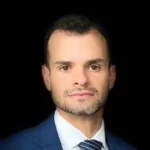
Serving as SLOM President for the 2025-2028 term, Santana is the Operational Processes Manager for Marine and Offshore Terminals at Transpetro. He previously served as Engineering Advisor at OCIMF, where he led global decarbonization initiatives and represented the industry before the IMO and regional regulatory bodies. He graduated with top honors in Naval and Ocean Engineering from UFRJ, where he also earned his master’s degree, and holds a specialization in Data Science from MIT. Drawing on this regulatory and analytical background, he discusses the current adoption of human factors, the regulatory outlook for Latin American terminals, and the gap that still separates the industry from data management that genuinely supports decisions.
In the interview published in February, you described the human factors approach as the next frontier in the drive toward zero incidents. Eight months later, and after the Rio Lessons Learned Workshop, what concrete evidence do you have that this approach is changing the way operators design their procedures?
The Rio Lessons Learned Workshop brought together 18 companies from six countries. In several of the cases presented, we saw operators already using the human factors approach to understand incidents and define corrective actions.
The approach starts with a few simple principles. People will make mistakes. Their decisions are rarely malicious and usually make sense to them at the time. We therefore need to understand how procedures, equipment, available information, operational pressure, and leadership shape their actions. People who do the work should also help develop solutions because they know those conditions first-hand.
One workshop case helps explain this shift. During an offshore operation at a single point mooring, strong winds arrived earlier than forecast. The resulting loads exceeded the system’s limits and caused the mooring hawser to part.
At first glance, it would be easy to say the mooring master placed too much confidence in the weather forecast. The human factors analysis went further. The forecast carried inherent uncertainty, but the system did not provide clear enough criteria for turning probabilistic information into an operational decision.
After the incident, the company introduced a clear weather protocol. It defined which forecast sources to use, incorporated confidence margins, required cross-checking between sources, and set objective triggers for starting, continuing, or stopping an operation.
This case reflects a pattern we saw across several presentations. Companies are looking beyond what one person did and examining the conditions that shaped the decision. That diagnosis allows them to redesign procedures and barriers to reduce the chance of recurrence. For me, that is the clearest evidence that the human factors approach is gaining ground.
On October 6, SLOM will hold its first European activity in Rotterdam aboard the Brazilian Navy Training Ship Brasil. The meeting will bring together European terminal operators and other industry stakeholders to discuss how to expand the sharing of lessons learned across the region. What do you hope to learn from European operators, and what can the Latin American experience contribute to the discussion?
We are going to Rotterdam with a clear ambition: to help catalyze a broader practice of sharing lessons learned across Europe. We want to do that alongside European operators and organizations working to improve maritime safety. The October 6 meeting aboard the Brazilian Navy Training Ship Brasil will be a first step: listening, building relationships and understanding how we can develop this initiative together.
SLOM’s experience in Latin America has taught us that this kind of exchange depends on trust. Our workshop brings operators together in a closed and confidential setting. Companies share real cases, take an active part in the discussion, and follow the Chatham House Rule. This allows people to speak openly about what happened, understand the conditions behind each case, and turn one company’s experience into learning for the wider community.
The model can contribute to the European discussion, although it will need to be adapted to the local context. We are not bringing a finished formula. We want to share an approach that has worked in Latin America and work with European operators to strengthen this culture of learning. When a lesson crosses borders before the same incident happens again, the whole industry becomes safer.
During your time at OCIMF, you represented the industry before the IMO, the European Union, and other regulatory bodies. From that regulatory perspective, which international regulation currently under development will have the greatest impact on Latin American terminals over the next three years, and how prepared is the region?
If I had to choose one, it would be the IMO Net-Zero Framework. It is still being developed and has yet to be formally adopted, but the direction is a global standard to reduce the greenhouse gas intensity of marine fuels combined with a pricing mechanism for emissions.
Although the regulation applies directly to ships, terminals will feel its effects. New fuels may pass through terminals as cargo, as bunkers, or as fuel used by the ships they receive. Terminals will also need to help reduce emissions during port calls, improve arrival coordination, and cut their own emissions.
This creates an opportunity for Latin America. The region can participate in new fuel supply chains, and support shipping decarbonization.
Preparedness across the region is uneven. Some terminals already have experience, technical capability, and projects underway. Others are just beginning their journeys. Each fuel brings different properties and risks. Operators need a management-of-change process that covers equipment, personnel management, training, procedures, maintenance, and emergency response.
Terminals can already identify risks and opportunities. Therefore, my advice is to start before every regulatory detail is settled. Those that begin now will make the transition safer and more competitive.
Your background combines naval engineering and data science. What is the industry getting wrong in the implementation of data analytics in terminal operations, and what would it take to move from dashboards to operational decisions?
I see two levels of maturity. The first is the use of dashboards and data analytics. Their adoption is widespread, but not yet consistent. Some operators have internal teams that periodically review performance indicators, identify the main bottlenecks, and assign actions to improve efficiency. In other cases, the dashboard exists but is not connected to a clear decision-making and follow-up process.
A dashboard creates value when data leads to a decision, the decision has an owner, and the resulting action produces an outcome that is measured again.
With artificial intelligence, we are seeing another risk: many organizations launch several projects at the same time, driven by different departments and without a common strategic direction. These initiatives may seem interesting individually, but they compete for resources and attention. They also frequently lack a baseline or a clear definition of success. As a result, it is difficult to determine whether a pilot generated value and even more difficult to scale it.
That is why I propose a crawl, walk, run approach. First, select one or two operational problems that truly matter. At an energy terminal, this may be a significant risk, such as a loss of containment or a transfer equipment failure. It may also be a bottleneck, such as the time required to begin operations.
Next, the data must be organized, a baseline defined, and an owner assigned. Then, test a small use case under real-world conditions. Only when the pilot shows a measurable result should it expand to other teams, processes, or terminals. The key is to remain focused and close the loop between data, decisions, actions, and results.
Cartagena will host the largest trade exhibition in SLOM’s history this year. Beyond the number itself, what does that growth say about the state of the sector?
The largest trade exhibition in SLOM’s twenty-two-year history shows that terminals are looking for solutions to a transformation already underway. New energy carriers, digitalization, artificial intelligence, and climate change are reshaping operations, while the need to reduce incidents and improve efficiency remains.
The conference has also grown in attendance. We expect more than 700 participants, which will broaden the exchange among operators, suppliers, authorities, and specialists from different countries.
We have also raised the standard of the technical program. The selection process was more rigorous, and every speaker received support from a public-speaking coach.
For us, growth means more people finding solutions at the conference that help them solve operational problems or prevent them altogether. I hope Cartagena sets a new benchmark for the value the SLOM Conference can bring to the community of energy terminal operators.
This article was developed by Felipe Santana President of SLOM and published as part of the ninth issue of Inspenet Brief magazine, which focuses on technical content related to the energy and industrial sectors.